
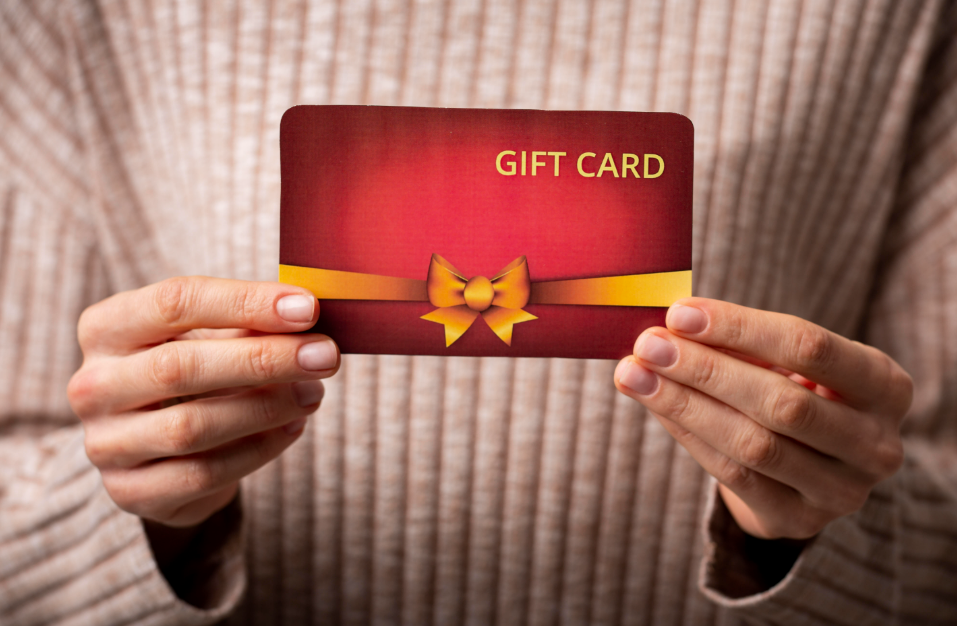
Gift cards are funny little things.
They look like money. They feel like money. They sit in your wallet like money.
But then somehow… they become not-quite-money.
Maybe it’s a restaurant card for a place you never visit. Maybe it’s a store credit from a return. Maybe it’s a gift card from two Christmases ago that has been living in your kitchen junk drawer beside a battery, a mystery key, and one lonely birthday candle.
At some point, the question becomes simple:
Should you sell that gift card online, or take it to a local buyer?
The answer depends on what matters most to you: maximum payout, speed, convenience, safety, or just being done with the whole thing before lunch.
Let’s look at both options.
Selling Gift Cards Online
Online gift card marketplaces can seem appealing at first. You type in the card brand, enter the balance, compare rates, and maybe get an offer. Easy enough, right?
Sometimes, yes.
Online buyers may advertise competitive rates, especially for big-name retailers, grocery stores, restaurants, and online shopping brands. If you are comfortable uploading card details, waiting for approval, and dealing with digital payment methods, the process can be convenient.
But here is the part worth slowing down for.
Selling a gift card online often means giving someone the card number and PIN before you have cash in hand. That can feel a little like handing your wallet to a stranger and saying, “Please be normal.”
Most online platforms have systems in place to reduce fraud, but problems can still happen. Payments may be delayed. Cards may be rejected. Balances may need additional verification. And if you sell through a less formal marketplace, you could run into buyers who claim the card did not work, dispute the transaction, or disappear altogether.
In other words, the internet can be useful. It can also be the Wild West with better fonts.
Selling Gift Cards Locally
A local gift card buyer offers a different kind of experience.
Instead of shipping a card, entering codes online, or waiting for an email confirmation, you bring the physical card in person. The buyer checks the card, verifies the balance, makes an offer, and explains what they can pay.
That face-to-face process can be especially helpful if you are selling multiple cards, a merchandise return card, or a card with an odd balance like $37.82. It can also be helpful if you simply want to ask questions without decoding a page of fine print.
Local buyers may not always match the highest rate you see advertised online. But the tradeoff is speed, clarity, and fewer unknowns.
You know who you are dealing with. You know where the business is. You can ask what types of cards they buy, whether they need the PIN covered, and whether they can make an offer before you commit.
That local relationship matters. It is the same reason many people prefer working with a trusted shop when selling or evaluating other value-based items, from jewelry and coins to collectible currency. For example, someone looking for a collectible foreign paper money dealer in Ocala, Florida may feel more comfortable talking to a real person who can inspect the item, answer questions, and explain what affects value.
The same principle applies to gift cards: sometimes, the best part of selling locally is knowing there is an actual human being on the other side of the counter.
Which Option Pays More?
This is the question everyone asks first.
And fair enough. You are selling the card because you want cash.
Online buyers may sometimes offer more for highly popular cards. But advertised rates do not always tell the whole story. You also need to consider processing time, payment method, platform rules, card rejection policies, and the risk of dealing with an unknown buyer.
Local buyers, on the other hand, usually base their offer on demand, resale risk, card type, balance, and whether the card can be verified. You may receive less than the full value of the card, but you get a more direct transaction.
A $100 gift card is not automatically worth $100 in cash to a buyer. Why? Because the buyer has to resell it, accept the risk, and make it worthwhile. Some brands are easy to resell. Others are not. Some cards are popular year-round. Others are only useful to a smaller group of buyers.
That is why payout rates can vary so much.
Which Option Is Safer?
If safety is your biggest concern, local selling has a clear advantage.
You are not emailing card numbers. You are not messaging strangers. You are not hoping a buyer honors their side of the deal. You are standing in a business, speaking with someone directly, and making a decision before you hand anything over.
That does not mean every local buyer is the same. You should still choose an established shop, call ahead, and ask how the process works.
A trustworthy local buyer should be willing to explain what they buy, what they do not buy, and what you need to bring. They should also be clear that the card’s balance and condition matter.
Which Option Is Faster?
Local usually wins on speed.
Online selling may require account setup, card submission, balance verification, approval, and payment processing. That might be fine if you are not in a rush.
But if your goal is, “I want to turn this card into cash today,” a local buyer may be the better route.
Bring the card in. Let them check it. Review the offer. Decide.
No password reset. No waiting three business days. No wondering whether your payment is “pending” or “processing” or “under review,” which are three phrases nobody has ever loved.
When Online Selling Might Make Sense
Online selling may be a good option if you have a very popular card, you are comfortable with the platform, and you do not mind waiting for payment.
It may also work well if you already have experience with gift card marketplaces and understand the risks.
The key is to use reputable platforms and avoid private buyers who pressure you to send card details before payment. If something feels rushed, vague, or too good to be true, it probably deserves a second look.
When Local Selling Might Make Sense
Local selling may be better if you want a faster transaction, prefer face-to-face service, or have questions about whether your card can be accepted.
It is also a strong option if you have store credit, merchandise return cards, partially used cards, or several different cards with different balances.
A local buyer can look at what you have and tell you what is possible. That alone can save time.
A Simple Rule of Thumb
Choose online if you are comfortable with digital platforms, willing to wait, and focused on comparing rates.
Choose local if you value speed, simplicity, and dealing with a real business in your community.
Neither option is perfect for every situation. But the best choice is the one that gives you the right mix of cash, confidence, and convenience.
Because that gift card in your drawer?
It is not doing much sitting there.
And frankly, it has had long enough to become useful.
About the Author


