
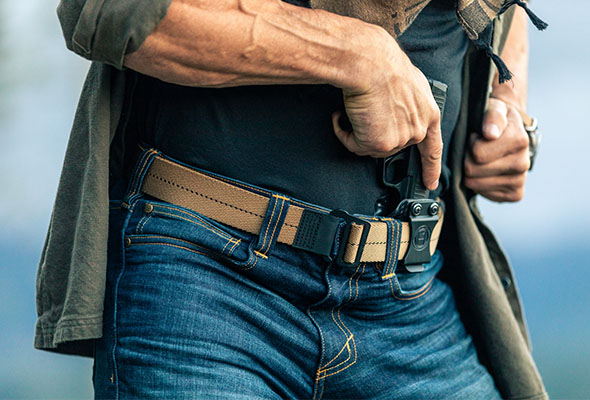
For many, reinforced belts built for everyday carry – Nexbelt is a simple utilitarian tool designed for the sole purpose of keeping trousers in place. However, for those who practice every day carry, the belt is the critical foundation of their entire load out. Whether you are carrying a concealed firearm, a multi-tool, a heavy flashlight, or spare magazines, a standard leather belt is rarely up to the task. It will sag, twist, and fail to provide the necessary stability, leading to discomfort and a loss of weapon retention. The solution is a reinforced belt designed specifically to support the weight of everyday gear. Choosing the right one is a balance of structural integrity, comfort, material science, and personal style.
The Importance of Structural Rigidity and Support
The primary difference between a conventional belt and one designed for everyday carry is rigidity. A reinforced belt is engineered to resist sagging underweight, which is known as vertical stiffness, while also preventing the belt from twisting horizontally, which is known as torsional rigidity. If a belt sags, your holster will tip away from your body, making the weapon less secure and significantly harder to conceal. If it twists, the draw stroke becomes inconsistent and dangerous.
A high-quality reinforced belt should feel stiff when you hold it, almost like a piece of plastic or metal. This rigidity allows the belt to act as a solid platform, distributing the weight of your equipment evenly around your waist rather than allowing it to hang off a single point on your hip. This not only improves comfort by reducing pressure points but also ensures that your holster remains securely in the same position throughout the day, regardless of your movements.
Material Choices: Leather vs. Synthetic Reinforcements
The reinforcement mechanism depends heavily on the materials used. The two main categories are reinforced leather and synthetic webbing. Reinforced leather belts look like traditional dress or casual belts, making them ideal for professional environments where discretion is paramount. However, they are not just leather. These belts contain a stiffening core—typically a strip of polymer, kydex, or spring steel—sandwiched between layers of high-quality leather. This construction provides the traditional aesthetic with the necessary tactical support.
Synthetic belts, usually made from heavy-duty nylon webbing, are the preferred choice for those who prioritize maximum rigidity and durability over aesthetic blending. These belts are often designed with dual layers of nylon for added stiffness. They are lightweight, highly resistant to moisture and abrasion, and often feature micro-adjustable buckles that allow for a precise fit. The choice between leather and synthetic often comes down to your daily dress code and whether you need the belt to look like a standard accessory or function purely as a piece of gear.
Buckle Technology and Adjustability
The buckle is the most vulnerable point on any belt, and for everyday carry, it must be exceptionally strong. Traditional buckle systems with pin-and-hole setups are generally not recommended because they do not offer fine enough adjustments to tighten the belt properly around a holster. Instead, specialized belts utilize heavy-duty metal buckles, such as those inspired by military parachute hardware, which offer immense tensile strength and quick-release functionality.
Micro-adjustable buckles, similar to those found on ratchet belts, are also popular because they allow you to tighten or loosen the belt in tiny increments without needing to find a specific hole. This is crucial because your waist circumference changes slightly throughout the day. A properly designed everyday carry buckle should not only be strong enough to hold the weight of your gear but should also allow you to adjust the tension of the belt quickly for maximum comfort when transitioning from standing to sitting.
Conclusion
Choosing the best reinforced belt for everyday carry is a vital step in ensuring your comfort, safety, and security. It is the foundation upon which your equipment rests, and its performance directly impacts your ability to carry effectively. By focusing on rigidity, selecting the right materials for your lifestyle, choosing a buckle that offers both strength and adjustability, and sizing the belt correctly for your specific loadout, you can guarantee a reliable experience every day. A high-quality reinforced belt is not just an accessory; it is an essential piece of tactical gear that allows you to carry with confidence.
About the Author


